


Atomic number is one of the first things you can learn from the periodic table. In reality, it links the nucleus's structure to the element's identity: chemists have a consistent way to tell elements apart.¹ The modern periodic table is arranged in increasing atomic-number order, so it's definitely something you should learn for chemistry.
Key Takeaways
- The atomic number is the number of protons in an atom’s nucleus.
- Every element has a unique atomic number that identifies it.
- Mass number counts protons and neutrons, while atomic number counts protons only.
- Relative atomic mass is different from both atomic number and mass number and may be shown as a decimal.
- In a neutral atom, the number of electrons equals the atomic number.
- Gaining or losing electrons changes an atom’s charge but does not change its atomic number.


What Is the Atomic Number?
Atomic number isn't just a way to categorise elements. The number comes from the atomic structure. This is why every element has its own fixed value. An atom is identified by its atomic number even if you don't have its chemical symbol.¹
| Element | Symbol | Atomic number | Protons | Notes |
|---|---|---|---|---|
| Hydrogen | H | 1 | 1 | First element |
| Carbon | C | 6 | 6 | Common non-metal |
| Oxygen | O | 8 | 8 | Period 2 element |
| Sodium | Na | 11 | 11 | Group 1 metal |
| Chlorine | Cl | 17 | 17 | Group 17 non-metal |
| Iron | Fe | 26 | 26 | Transition metal |
The examples here show how the values change from element to element. Don't get this confused with how big or heavy elements are, though. It just means the nucleus has more protons than an element with a lower number.¹
The atomic number is represented by Z. Every atom of the same element has the same number of protons and therefore the same atomic number.
The proton count determines an element's identity. For example, Carbon-12 and carbon-14. Both are carbon, but they have different numbers of neutrons in their nuclei, while keeping the same proton count.⁵ If that number were to change, you'd have a different element rather than a different isotope of carbon.¹
What the Atomic Number Tells You
Atomic Number in the Periodic Table
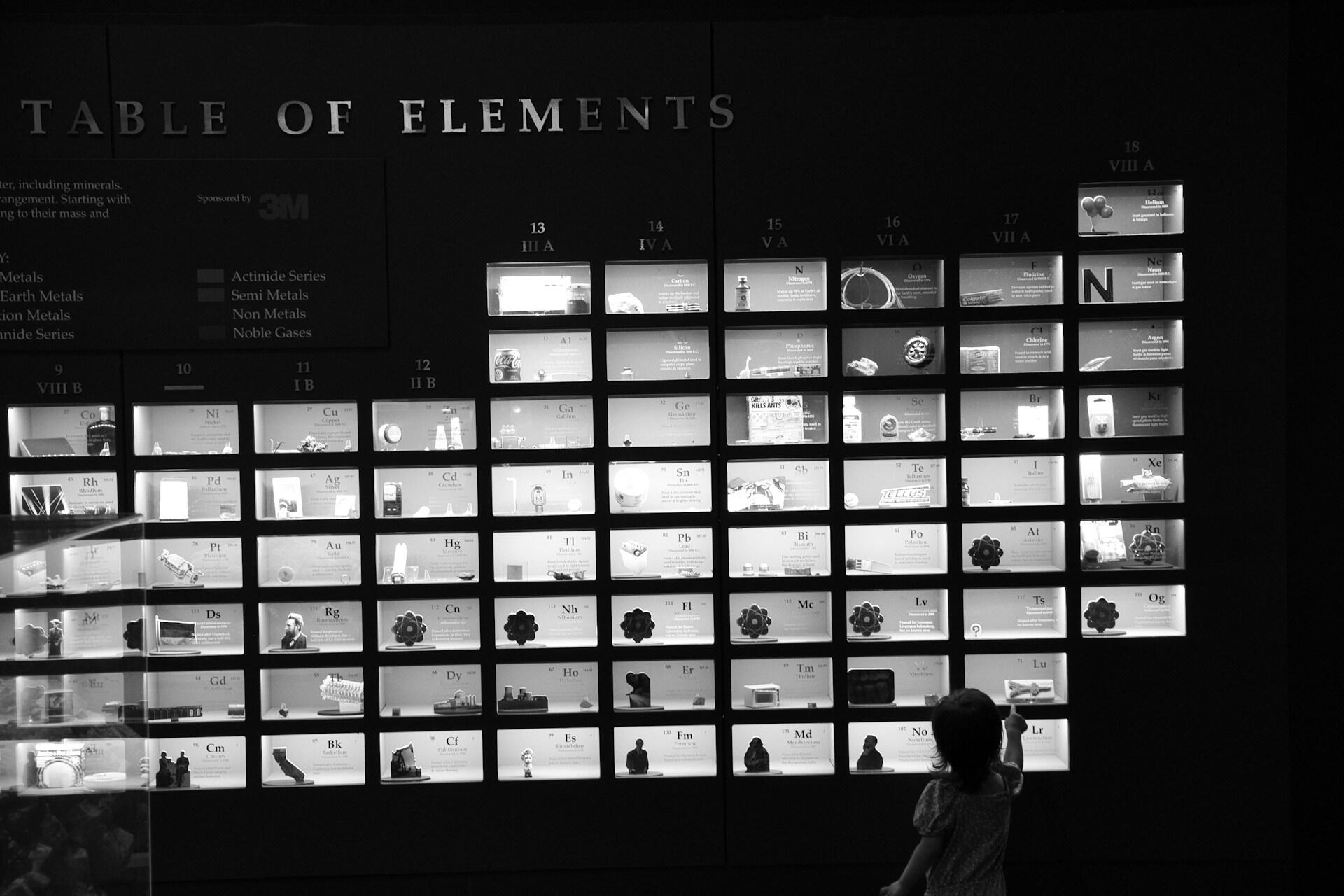
The atomic number's dual function is most apparent in the periodic table, where elements are organised by it. The entire order of the table follows this number. This is why hydrogen comes before helium, helium before lithium, and so on because the proton number rises by one as you move from one element to the next.⁴ It isn't alphabetical, relative atomic mass, or year of discovery.
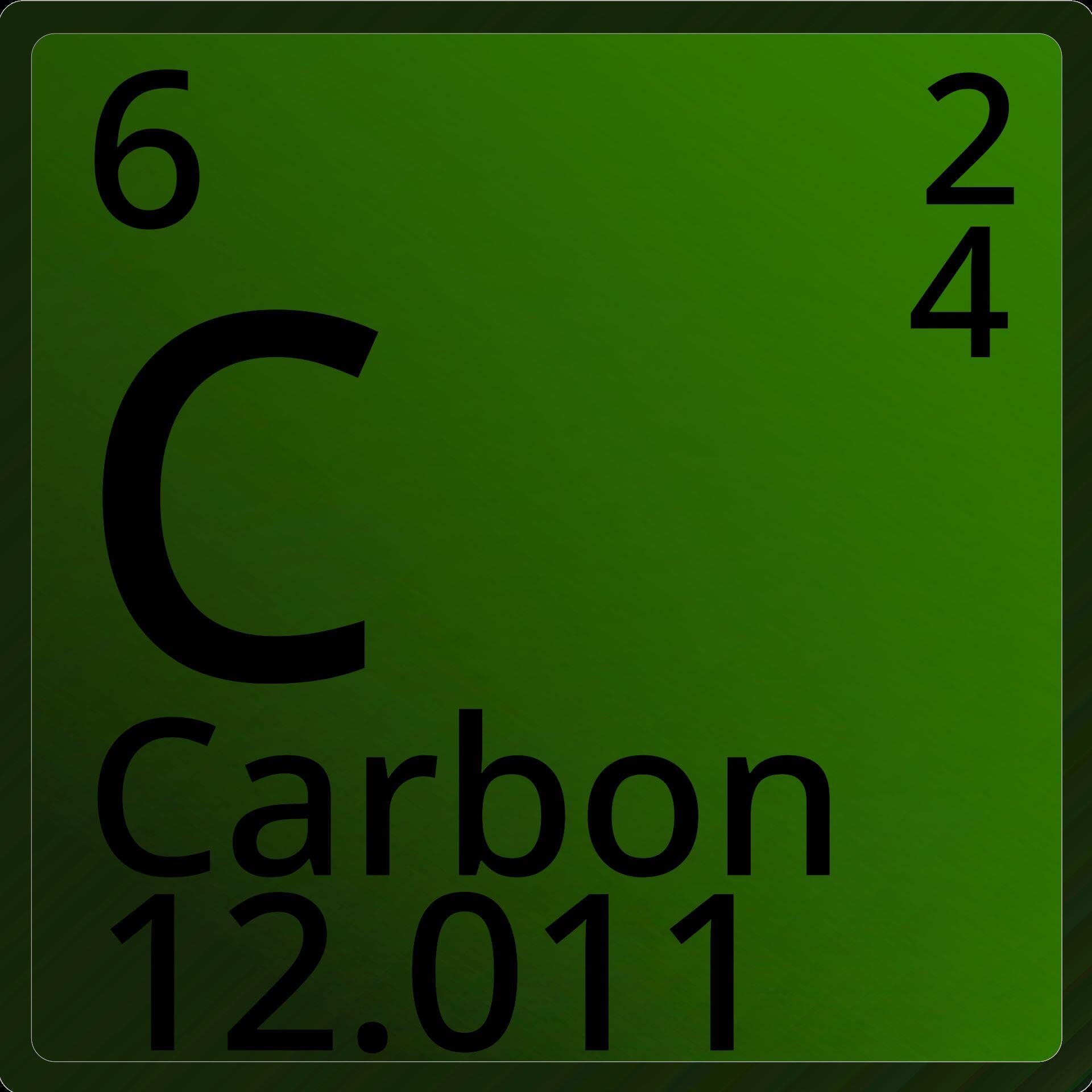
6→ Atomic number
C→ Chemical symbol
Carbon→ Element name
12.011→ Relative atomic mass
Atomic Number vs Mass Number
Mass number describes an isotope rather than a general element. IUPAC treats mass number as a property of a nuclide, which is why carbon-12 and carbon-14 include different numbers even though both are carbon.² Since both are written as whole numbers, they're easy to confuse, which is why you should pay particular attention to the difference between them.
The atomic number counts protons in the nucleus. The mass number counts the total number of protons and neutrons in a particular nucleus.
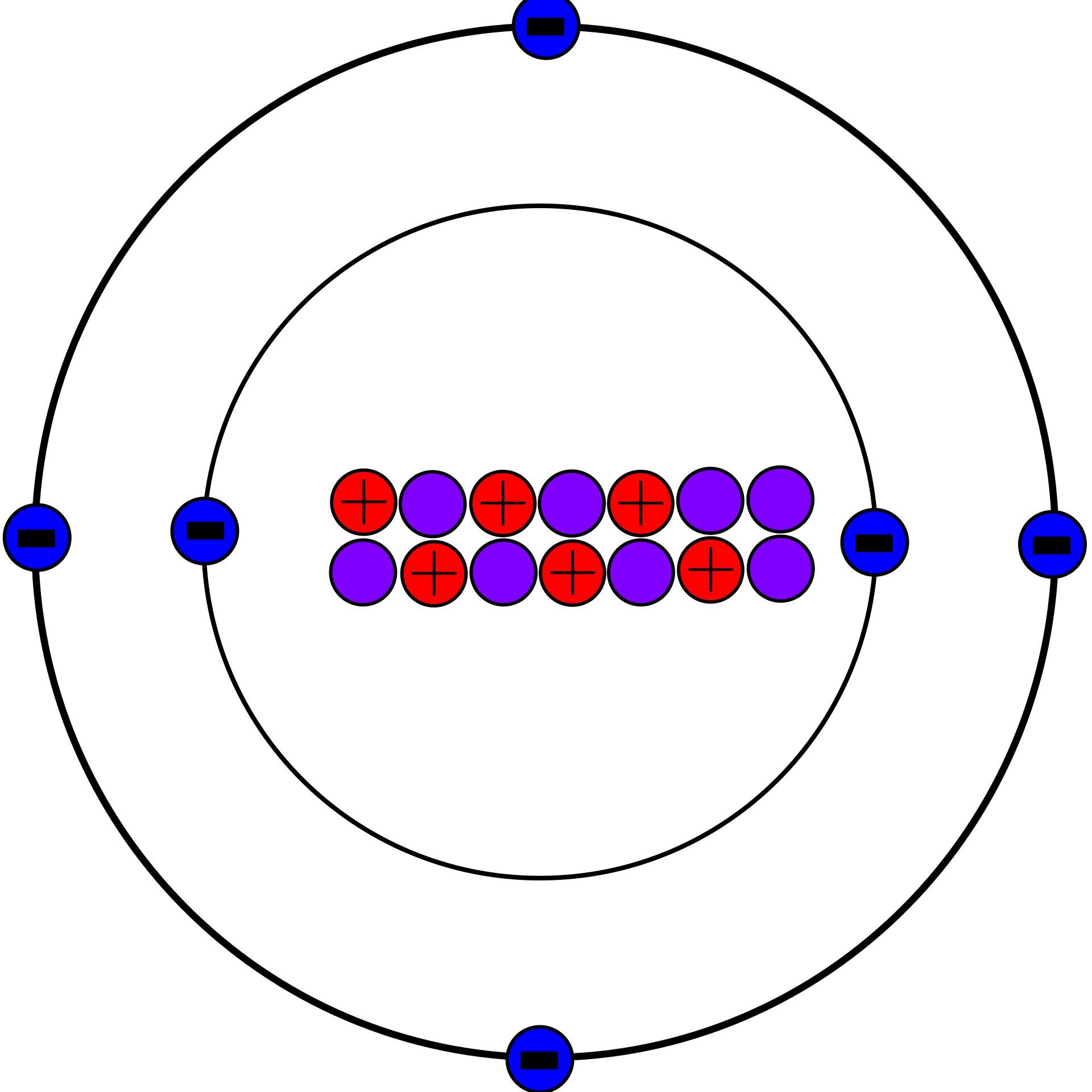
Carbon-12 has six protons and six neutrons. Carbon-14 has six protons and eight neutrons.⁵
This is a change in the neutron count, which means the mass number is different, but the atomic number and the proton count are the same.
If you know one and the other, you can find the neutron count by subtracting the atomic number from the mass number, so carbon-14 gives 14 − 6 = 8 neutrons.
Atomic Number vs Atomic Mass
Don't confuse the period-table figure atomic mass with the mass number of a specific isotope. A relative atomic mass can reflect contributions from more than one naturally occurring isotope. This is why the value displayed for an element is often not a whole number.³ Don't round it and don't use it as if it describes the exact nucleus of one atom.
Atomic number
- Symbol: Z
- Number of protons
- Always a whole number
- Identifies the element
Relative atomic mass
- Relates to the mass of atoms
- Reflects isotopic composition
- Often appears as a decimal
- Does not give the proton count
Take chlorine as an example. Its atomic number is 17, but its atomic mass is about 35.45.⁸ The first is the proton count, with the decimal reflecting the masses and abundances of chlorine isotopes. If you got a chemistry question asking about a particular chlorine isotope, for example, you'd need the specific mass number before you could work out the neutron count.
How to Find the Atomic Number
You may be asked in one of two ways to find an atomic number. You may be given the element name or symbol with a periodic table providing the information you need. In other questions, you may be given the proton count and have to identify the element from it.⁴ Work out what kind of question you're being asked before you start calculating, as you may end up working out something you don't need to.
- Find the element on the periodic table.
- Locate its atomic-number value.
- Read that number as the number of protons.
- If the atom is neutral, use the same number for its electrons.
Let's look at an example. Carbon's periodic-table entry gives atomic number 6.⁷ Chlorine's entry is 17. A question stating that a nucleus contains 17 protons matches chlorine, not carbon, as much as it's our favourite element.⁸ This method can work the other way, too. An unknown atom with 11 protons has atomic number 11, which would be sodium.⁴ You can do this with any element from the alkali metals to noble gases.
Why Is the Atomic Number Important?
Atomic number identifies an element. It's a property of the element and a way to classify it on the periodic table. Adding or removing neutrons creates different isotopes, and gaining or losing electrons creates ions, but neither changes the proton count.⁵ A change in protons would change the atomic number and then what element the atom is.¹
Identifies elements
The proton number determines which chemical element an atom belongs to.
Organises the periodic table
Elements are arranged in increasing order of atomic number.
Helps explain atomic structure
The atomic number gives the proton count and, in a neutral atom, helps determine the electron count.
Atomic number is therefore a useful anchor, especially when you have several pieces of chemical information at a given time. Rather than memorising facts about every element, start with its place in the atomic-number sequence and then interpret the other information around it.⁴ This is a great approach when you have questions combining periodic-table data with protons, neutrons or electrons. While the atomic number identifies an element, its electrons play a major role in how that element behaves in chemical reactions.
Atomic Number, Electrons, and Neutral Atoms
Protons and electrons carry opposite charges. Neutrality depends on balancing the nucleus' positive charge with the electrons' negative charge. A neutral atom has no electrical charge since the positive and negative charges cancel each other out.⁶
In a neutral atom, the number of electrons equals the number of protons. This means the electron count matches the atomic number.
The relationship changes when atoms become ions because ions gain or lose electrons. For example, sodium can lose an electron to form Na+, leaving 10 electrons while its nucleus still contains 11 protons. Its atomic number remains 11 because ion formation changes the electrons outside the nucleus rather than the proton count that identifies sodium.⁶ Be aware of this as it helps you distinguish a change in charge from a change in elemental identity, which can often trip up students. Atomic structure also helps explain why some dangerous chemical elements behave very differently from others.
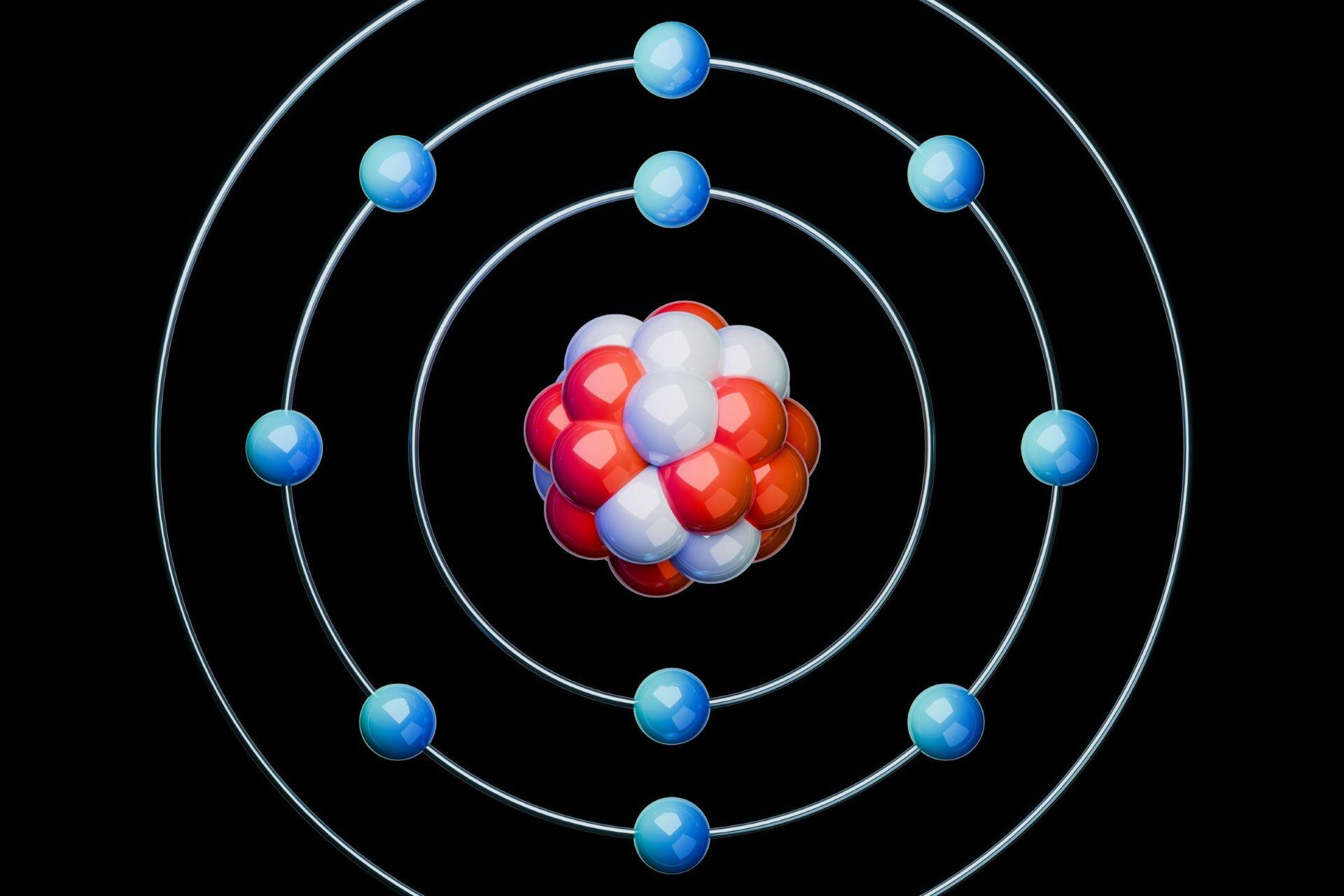
- Atomic number = number of protons
- Mass number = protons + neutrons
- Neutral atoms have equal numbers of protons and electrons
- Isotopes change neutron count, not atomic number
- Ions change electron count, not atomic number
References
- International Union of Pure and Applied Chemistry. “Atomic Number, Z.” Compendium of Chemical Terminology (the Gold Book), 5th ed., 2025, https://goldbook.iupac.org/terms/view/A00499. Accessed 7 Oct. 2026.
- International Union of Pure and Applied Chemistry. “Mass Number.” Compendium of Chemical Terminology (the Gold Book), 5th ed., 2025, https://goldbook.iupac.org/terms/view/M03726. Accessed 7 Oct. 2026.
- National Institute of Standards and Technology. “Atomic Weights and Isotopic Compositions – Column Descriptions.” NIST, https://www.nist.gov/pml/atomic-weights-and-isotopic-compositions-column-descriptions. Accessed 7 Oct. 2026.
- OpenStax. “2.5 The Periodic Table.” Chemistry 2e, OpenStax, 14 Feb. 2019, https://openstax.org/books/chemistry-2e/pages/2-5-the-periodic-table. Accessed 7 Oct. 2026.
- OpenStax. “21.1 Nuclear Structure and Stability.” Chemistry 2e, OpenStax, 14 Feb. 2019, https://openstax.org/books/chemistry-2e/pages/21-1-nuclear-structure-and-stability. Accessed 7 Oct. 2026.
- OpenStax. “Chapter 2 Summary.” Chemistry, OpenStax, 2015, https://openstax.org/books/chemistry/pages/2-summary. Accessed 7 Oct. 2026.
- Royal Society of Chemistry. “Carbon.” Periodic Table, Royal Society of Chemistry, https://periodic-table.rsc.org/element/6/carbon. Accessed 7 Oct. 2026.
- Royal Society of Chemistry. “Chlorine.” Periodic Table, Royal Society of Chemistry, https://periodic-table.rsc.org/element/17/chlorine. Accessed 7 Oct. 2026.
Summarise with AI:
Did you like this article? Leave a rating!

 Loading...
